+86 13268009808
 Eant@yianttech.com







 Yiant
Yiant Jul 17 2026
Why Battery Insulation Is Critical for Long-Term Safety
When building custom lithium battery packs for e-bikes, energy storage systems, power tools and mobility devices, electrical and thermal insulation is one of the most overlooked yet foundational design elements. Internal short circuits, thermal runaway, and accelerated cell aging often stem from inadequate separation between battery cells, conductive metals, and external structures. Quality insulating paper series and Mylar film series form a reliable barrier that prevents these hazards, extends battery cycle life, and ensures compliance with global battery safety standards.
Lithium-ion cells generate heat during charging and high-current discharging. Without proper insulation, direct contact between cell casings, nickel strips and wiring can create leakage paths, hotspots, and gradual degradation of battery separators. In high-vibration e-bike applications, repeated friction can also wear down basic packaging materials, creating hidden failure risks over months of daily use. Professional insulating materials solve these core issues with consistent dielectric performance, heat resistance and mechanical durability.
Key Types of Insulating Paper and Their Applications
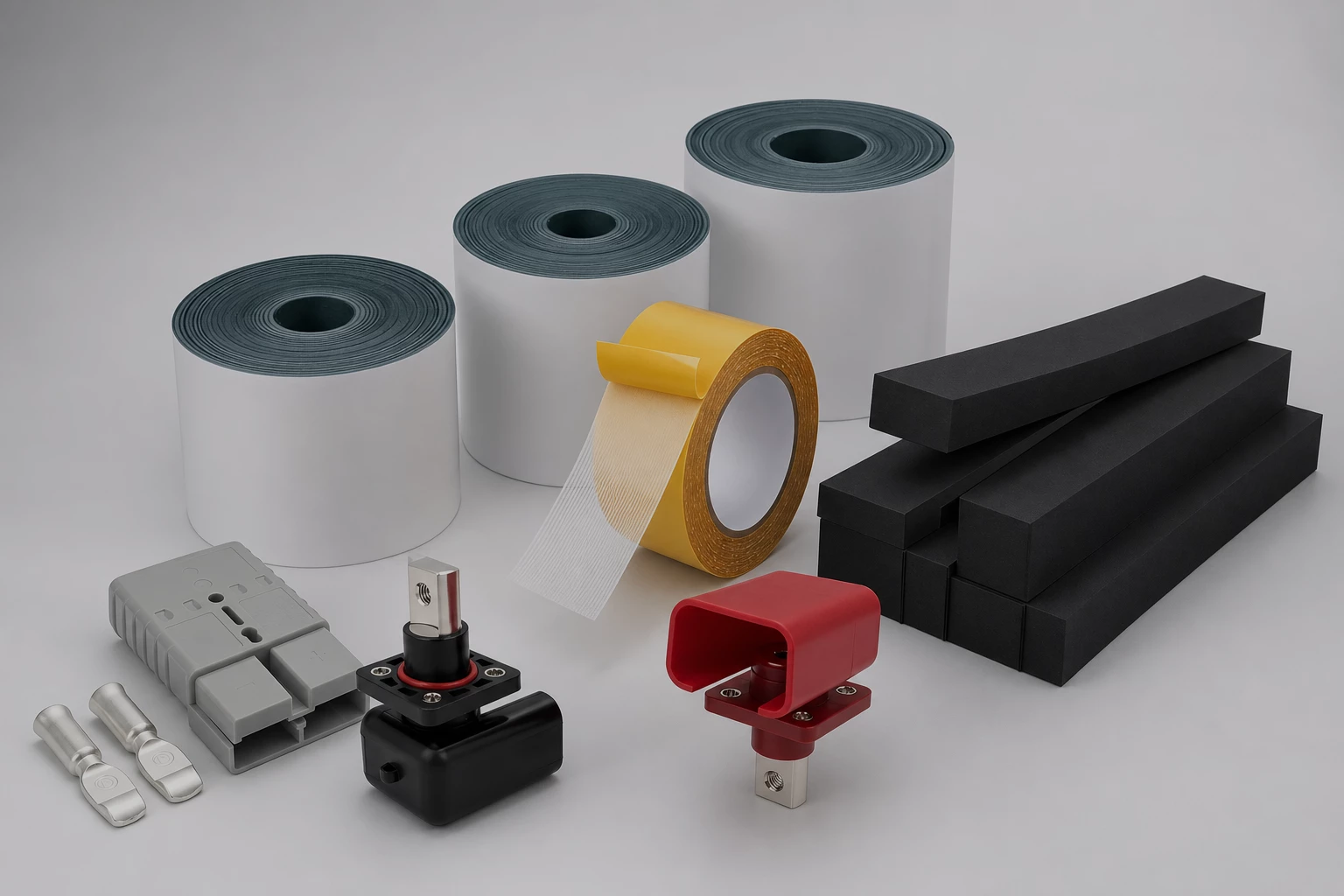
Our insulating paper series includes red vulcanized fiber paper, highland barley paper, and continuous insulating paper rolls. Red vulcanized fiber paper features high mechanical strength, excellent arc resistance and thermal stability, commonly used for rigid cell spacer structures and battery base insulation. Highland barley paper is lightweight, flexible and has good heat dissipation characteristics, perfect for wrapping individual cells and filling narrow gaps inside battery cases. Continuous insulating paper rolls allow automated mass production cutting, greatly improving assembly efficiency while maintaining uniform insulation thickness.
These papers are engineered to resist high temperatures, avoid carbonization, and maintain insulation performance under long-term thermal cycling and humid environments. They physically isolate adjacent battery cells, reduce heat transfer between hot cells, and add a rigid structural layer to prevent cell deformation during compression and vibration.
Mylar Film: Flexible Secondary Insulation for Battery Modules
Mylar film is widely adopted as secondary wrap insulation for finished battery modules, available as custom-sized Mylar sheets and Mylar film rolls. Mylar polyester film delivers outstanding dielectric strength, puncture resistance, tear resistance and dimensional stability across a wide temperature range. It can conform closely to irregular battery shapes while remaining durable during repeated bending and vibration.
Custom-sized Mylar sheets fit perfectly for fixed module layouts, while continuous Mylar film rolls suit automated wrapping processes for large-scale battery production. Mylar wrapping protects the main insulating paper and cell surfaces from abrasion, dust and moisture contamination, adding a second layer of electrical isolation. When combined with core insulating paper, Mylar builds a dual-insulation system that drastically reduces short-circuit risks in enclosed battery cases like Hailong e-bike housings.
Best Practices for Battery Insulation Material Integration
During battery assembly, ensure full surface coverage of insulating materials and avoid gaps or creases that reduce insulation integrity. Match material temperature ratings to the actual operating environment: higher-temperature grades are essential for high-power battery applications. Always cut materials with precise dimensions to avoid blocking natural heat dissipation paths. Regularly check insulation integrity during routine battery maintenance, especially for frequently used e-bike battery packs.
By selecting reliable insulating paper and Mylar film materials, battery manufacturers and DIY builders can minimize safety risks, reduce warranty failures, and create stable battery systems that perform consistently over thousands of charge cycles.